


Alternatives to Disposable Kids Clothes That Actually Last
Last Updated: November 2, 2026
Quick Summary
The best alternatives to disposable kids clothes are secondhand and hand-me-down clothing, clothing swaps and freecycling, simple repairs and patches, repurposing worn items, and rental or take-back programs. Choosing heavier fabrics and reinforced seams means fewer purchases and less waste overall.
- A 100% organic combed ring-spun cotton tee at 4.6 oz./yd.² is a solid middle ground for durability.
- Run used garments through five checks, including stretching seams and measuring instead of trusting the tag.
- Keep a repair kit with matching thread, iron-on patches, a needle, and fabric scraps.
- Compare rental programs by cost per wear, return friction, inventory fit, and end-of-life transparency.
- Run a seasonal workflow: audit, sort into four labeled bins, store by size, measure, buy fewer sturdier pieces, repair, then pass along or recycle.
Table of Contents
- Why Disposable Kids Clothes Cost More Than You Think
- Sustainable Kids Clothing: What to Look For in Fabric and Construction
- Secondhand Kids Clothes: How to Shop Used Without the Guesswork
- Hand-Me-Downs, Clothing Swaps, and Freecycling in Your Community
- How to Repair Kids Clothes So They Last Another Season
- Repurpose Outgrown Kids Clothes Into Things You Keep
- Rental, Subscription, and Take-Back Programs Worth Knowing
- A Step-by-Step System for Managing Clothes as Kids Grow
- Frequently Asked Questions
Why Disposable Kids Clothes Cost More Than You Think
The cheapest kids shirt on the rack is rarely the cheapest shirt you will own.
Here is the math most shoppers never run. A budget tee that costs a few dollars and survives a handful of washes has to be replaced several times a year.
There is an environmental cost too. According to the U.S. Environmental Protection Agency's textile waste data, textiles make up a meaningful and rising share of what Americans throw away each year.
The throughline for everything below: durable clothing is not a luxury upgrade, it is the cheaper system.
Sustainable Kids Clothing: What to Look For in Fabric and Construction
Sustainable kids clothing is apparel built from lower-impact materials and stitched to survive repeated washing and active play. The label matters less than three things: fabric weight, seam construction, and whether the material is certified.
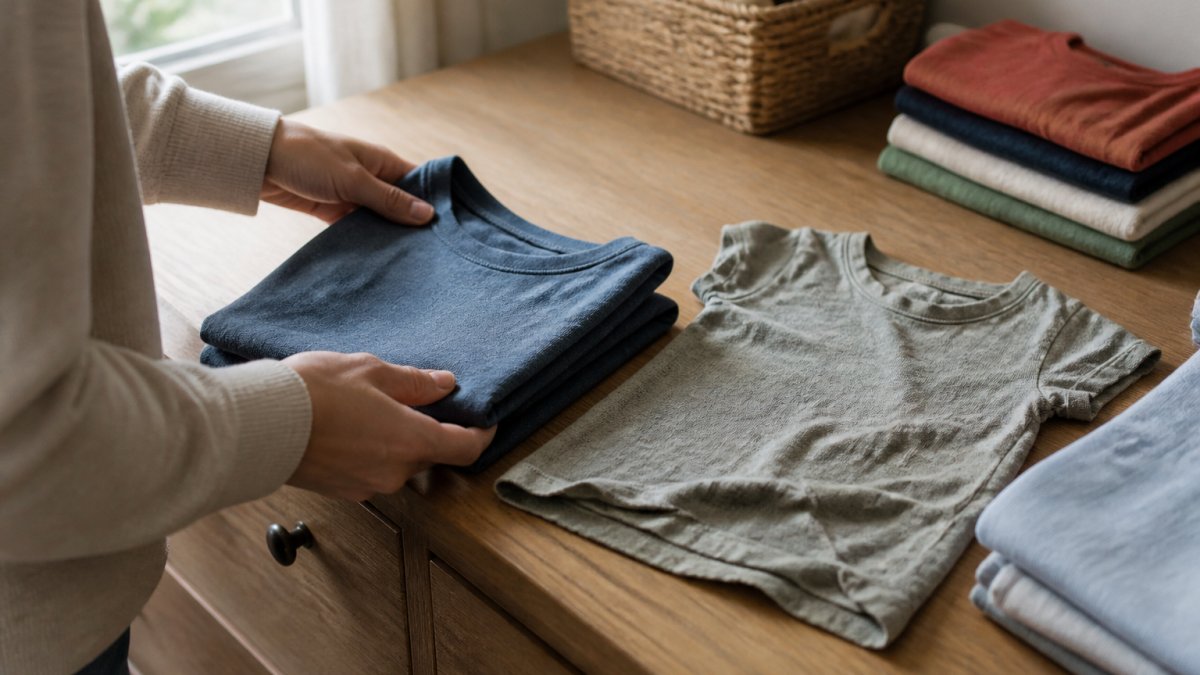
Fabric weight, seams, and the details that survive the wash
Start with fabric weight. Heavier knits hold their structure through the wash cycle.
Then look at the seams:
- Double-needle topstitch at hems and sleeves
- Twill-taped neck and shoulders on some styles
- Self-fabric neck tape at the back of the neck
Certifications can help you check what a fabric contains. GOTS (Global Organic Textile Standard) and OCS (Organic Content Standard) verify organic cotton content. GRS (Global Recycled Standard) certifies recycled material.
For a closer look at real examples of organic cotton kids clothes that survive playtime, browse our guide to organic cotton clothes for toddlers.
Secondhand Kids Clothes: How to Shop Used Without the Guesswork
Secondhand kids clothes are the single most affordable alternative to disposable clothing, and the quality varies wildly. The trick is buying with a checklist instead of hope.
Checking condition, safety, and fit before you buy
Run every used garment through five checks:
- Stretch the seams. If stitching pops or gaps, walk away.
- Look at the knees, elbows, and seat. Thin, shiny patches mean the fabric is about to fail.
- Check the collar and cuffs. Sagging ribbing will only get worse.
- Sniff and inspect for recalls. Skip anything with loose snaps, drawstrings at the neck, or peeling prints.
- Measure, don't trust the tag. Kids sizing runs inconsistent across brands, and secondhand shrinkage is common.
That last point is the one most shoppers skip. Before you commit to a bundle of used clothing, learn how to measure kids for clothing so fit isn't a gamble and you avoid a pile of returns.
Watch out: used sleepwear and anything labeled as flame-resistant may have lost its protective treatment after repeated washing. Treat those items with extra caution.
Hand-Me-Downs, Clothing Swaps, and Freecycling in Your Community
Hand-me-downs and clothing swaps are the lowest-cost, lowest-effort alternatives to disposable kids clothes, because the clothes already exist.
Set up a simple rotation. Every season, sort what no longer fits into "pass along," "swap," and "keep." Local parent groups, preschools, and neighborhood forums are natural swap hubs.
The unspoken rule that makes swaps work: only pass along clothes that are genuinely wearable.
How to Repair Kids Clothes So They Last Another Season
Repairing kids clothes is the highest-return habit in this entire guide. A patch on a knee or a reinforced seam adds months of wear for the cost of a needle and thread.
Keep a small repair kit: matching thread, iron-on patches, a needle, and fabric scraps. Then work through the common failures:
- Knee blowouts: iron-on patch on the inside, then a decorative patch on the outside
- Split seams: backstitch by hand or run a machine zigzag
- Loose buttons and snaps: reattach immediately before they tear the fabric
Once a garment is repaired, protect it from the next wash cycle. A guide on how to prevent kids clothes shrinking covers water temperature, drying, and fabric care so your fixes aren't undone in the laundry.
Repurpose Outgrown Kids Clothes Into Things You Keep
When a garment is truly past wearing, repurposing outgrown kids clothes keeps the fabric in use instead of in the trash. Some items become functional, some become keepsakes.
Functional repurposing:
- T-shirts into cleaning rags or play aprons
- Sweatshirts into pillow covers or stuffed-toy stuffing
- Denim into patches, pencil cases, or tote bags
Keepsake repurposing:
- Memory blankets stitched from a stack of favorite onesies and tees
- Memory bears made from a single treasured outfit
- Framed fabric squares for a nursery wall
If you are planning ahead for the next size up, look at tested durable play clothes for toddlers so future purchases survive hand-downs and reuse instead of falling apart first.
Rental, Subscription, and Take-Back Programs Worth Knowing
Clothing rental, subscription, and take-back programs are the newest alternatives to disposable kids clothes, and they solve a specific problem: kids outgrow sizes before they wear items out. But they are not interchangeable, and the wrong model can cost more than buying durable pieces outright. Here is how the three main models actually work, what they cost in practice, and who each one fits.
Rental and subscription services
Rental services ship a rotating wardrobe of sizes for a monthly fee, then you return items when they no longer fit. Subscription boxes work similarly but often mix rental with keep-what-you-love purchases.
The trade-offs are real. Selection is limited to the service's inventory, sizing gaps appear at the extremes, and you need the discipline to return items on time or you trigger late fees.
Take-back and trade-in programs
Take-back programs work differently. Some brands accept worn items back for recycling or resale credit; others run trade-in events where you swap outgrown clothes for a discount on the next size.
A common pattern is that take-back credit is smaller than the resale value of the garment, so treat these programs as a convenience and a disposal route rather than a money-maker.
How to compare the models without guessing
Run every program through four questions before you commit:
- Cost per wear. Divide the monthly fee by the number of items your child actually wears that month. If it is higher than buying two durable pieces, skip it.
- Return friction. Count the steps to return: packaging, shipping, deadlines. High friction means late fees.
- Inventory fit. Check whether the service stocks your child's size and the styles your family actually uses.
- End-of-life transparency. Ask where returned clothes go. A program that cannot answer is not a circular program.
For families who want to own fewer, sturdier pieces instead of renting, the construction details in the fabric and construction section above matter more than any subscription. And when rental items do wear out, route them through the repair and textile recycling steps later in this guide rather than the trash.
A Step-by-Step System for Managing Clothes as Kids Grow
Managing kids clothes as a system beats buying reactively, size by size. The gap in most advice is that it stops at "sort and donate." A workable system runs on a seasonal calendar, uses labeled bins, and has a clear end-of-life route for every garment. Here is the workflow we recommend, built around the four points in the year when kids actually change sizes.
The seasonal workflow
Run this cycle at the start of spring, summer, fall, and winter, or whenever a growth spurt forces it:
- Audit. Pull everything out of the drawer and closet. Try on the borderline pieces rather than guessing from the tag.
- Sort into four bins: keep, pass along, repair, recycle. Label them so the next cycle is faster.
- Store the keep bin by size. Use clear bins with size labels so the next size up is ready when you need it, not buried.
- Measure before you buy. Use a tape measure and a size chart, not the tag, because sizing runs inconsistent across brands.
- Buy fewer, sturdier pieces. Prioritize fabric weight, seams, and certifications so the next cycle has less to replace.
- Repair immediately. A small fix now prevents a replacement later.
- Pass along or recycle. Nothing goes in the trash unless there is no other option.
What goes in each bin
- Keep: fits now and will fit through the season. Store off-season keep items by size.
- Pass along: clean, wearable, and in good condition. Route to swaps, freecycle groups, or a younger sibling.
- Repair: seams, knees, buttons, and hems that a needle and thread can fix. Repair before the next wash cycle.
Textile recycling when reuse is not possible
Textile recycling is the responsible disposal route when reuse is not possible, and it is the step most guides skip. Many municipalities host textile collection events, and some retailers accept worn items for recycling. Before you drop a bag off, confirm the program actually recycles rather than downcycles into landfill. Damaged cotton and cotton-blend items are the best candidates; items with heavy synthetic coatings or hardware are harder to process.
The buy-new checkpoint
When you do buy new, choose pieces built to last so the system has less to replace. Our unisex organic mid-light t-shirt is 100% organic combed ring-spun cotton at 4.6 oz./yd.² with double-needle topstitch and self-fabric neck tape. For cooler months, our unisex organic sweatshirt pairs 80% organic cotton with 20% recycled polyester, with GOTS and OCS certification for its organic cotton content and GRS certification for its recycled content.


That is the whole system: audit on a seasonal calendar, sort into four labeled bins, repair before you replace, pass along generously, and recycle last. Fewer purchases, less waste, and clothes that actually make it to the next kid.
Here is the seasonal workflow the article recommends, from audit to final disposal.
| Step | What to do | Note |
|---|---|---|
| Audit | Pull everything out and try on borderline pieces | Don't guess from the tag |
| Sort | Divide into keep, pass along, repair, recycle | Label the four bins |
| Store | Keep bin stored by size in clear labeled bins | Next size up ready when needed |
| Measure | Use a tape measure and size chart before buying | Sizing runs inconsistent across brands |
| Buy | Buy fewer, sturdier pieces | Prioritize fabric weight, seams, certifications |
| Repair | Fix small issues immediately | Prevents a replacement later |
| Pass along or recycle | Route wearable items to swaps or freecycle | Trash only if no other option |
Frequently Asked Questions
What are the best alternatives to disposable kids clothes?
The strongest options are durable new garments made from organic cotton, secondhand and thrifted pieces, hand-me-downs from family and friends, clothing swaps, and rental or take-back programs. Each one keeps kids clothes in use longer instead of heading for the trash. Many families combine a few: buy a small number of well-made new pieces, fill gaps secondhand, and repair or repurpose whatever wears out.
How can I make kids' clothes last longer?
Wash less often, use cold water, and air-dry when you can. Turn garments inside out before washing to reduce surface wear. Reinforce knees and cuffs with a patch before holes appear. Check seams and buttons each season and fix small problems early. Choosing heavier fabrics with double-needle stitching, like a 10.3 oz. organic cotton sweatshirt, gives you a garment with more room to survive repeated washing and real playtime.
Is secondhand clothing a good option for kids?
Yes, especially for fast-growing children. Secondhand kids clothes cost less, keep textile waste out of landfills, and often arrive already softened by washing. Check for stretched necklines, thin knees, and broken zippers before buying. Wash everything on a warm cycle before the first wear. For items your child is sensitive to, look for soft natural fibers and cut out scratchy tags.
What should I do with kids' clothes that no longer fit?
Sort them into four piles: pass along to a younger child, sell or trade at a resale shop, donate to a local organization, or set aside for repurposing. Stained or torn pieces can become cleaning rags, doll clothes, or patch material. Anything truly unwearable belongs in a textile recycling bin, not the household trash. Keeping a labeled bin for outgrown clothes makes the sort quick when a growth spurt hits.
Every family faces the same moment: the drawer is full, the child has outgrown half of it, and the cheap replacements are already falling apart. The Tee Shop builds apparel that survives that cycle, with play-proof comfort, heartfelt high-quality designs, and every thread supporting the childcare community. Get started with The Tee Shop and build a wardrobe that lasts through real playtime.
