


How Do You Measure Kids for Clothing?
Last Updated: November 1, 2026
Quick Summary
To measure kids clothing, record height against a wall with a book on the head, then take chest, waist, hip, sleeve, shoulder and inseam measurements with a soft tape over light clothing. Compare those numbers with the size chart and choose the row that matches.
- Measure height against a flat wall with heels touching, using a book pressed on the head.
- Take chest, waist and hips over light clothing, keeping the tape level and snug, not tight.
- Measure inseam from the top of the inner thigh down to the ankle bone.
- Repeat any measurement that differs by more than half an inch and average the readings.
- When between sizes, prioritize chest for tops and waist and inseam for pants.
Table of Contents
- What You Need Before You Measure a Child
- Step-by-Step: How to Measure a Child's Height for Clothes
- How to Measure Chest, Waist and Hips on a Child
- How to Measure a Child's Inseam for Pants
- Reading a Kids Clothing Size Chart Measurements Guide
- Choosing a Size When Your Child Falls Between Sizes
- Booking a Fitting Check With The Tee Shop's Size Guide
- Frequently Asked Questions
Getting the size right is the difference between a shirt that lasts a season and one that gets outgrown or outgrows the child in a week. Knowing how to measure kids clothing is the simplest way to avoid both.
Kids grow fast, and their proportions change with every year. A 4-year-old and a 7-year-old can share the same height but need very different chest and waist room.
Good measurements can help reduce the chance of a return. When a shirt is too tight across the chest or pants are too short in the leg, a return and a wait are often the result.
Here is what accurate measuring helps you do:
- Pick the right size the first time
- Avoid clothes that feel tight, pull, or ride up
- Plan for growth without buying too big
- Compare sizes across different brands with more confidence
Measurements work best when they are taken the same way each time. Small differences in posture or tape placement can throw off the result by a centimeter or more. The steps below show how to keep your numbers consistent.
What You Need Before You Measure a Child
Before you start, gather a few simple tools. A soft cloth measuring tape works far better than a metal ruler or a string you have to mark and measure again. Pick a quiet moment when your child is calm and willing to stand still.
Have these items ready:
- A flexible cloth tape measure
- A pen and paper to record each number
- A wall or doorframe for height checks
- Your child's current clothes, ideally fitted and not bulky
Measure over light clothing, such as a thin t-shirt and shorts. Heavy sweaters or jackets add inches that will throw off the numbers. If your child squirms, try measuring after a rest or a snack, when they are more relaxed.
A common mistake is measuring in a rush. Give yourself time and say what you are doing. Kids are more cooperative when they know what to expect.
Step-by-Step: How to Measure a Child's Height for Clothes
Height helps you choose the right length in shirts, dresses and pants. Start by having your child stand with their back against a flat wall, feet flat and heels touching the wall. Keep their head level and eyes facing forward.
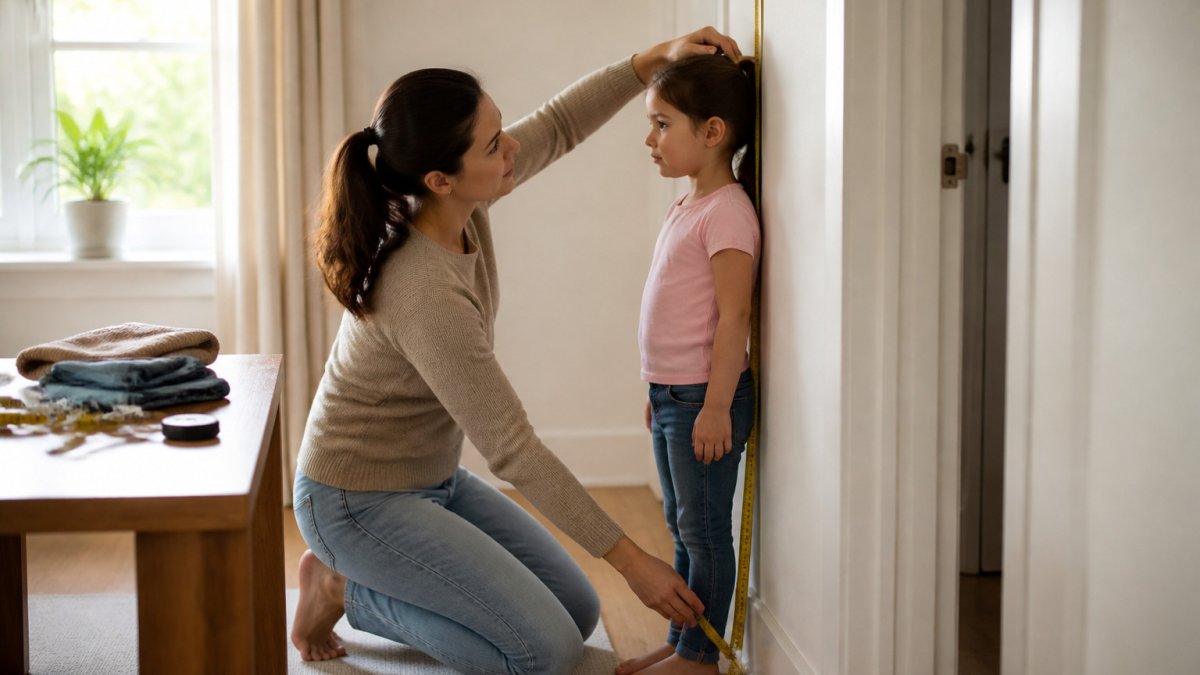
- Stand your child straight, with heels, back and head against the wall.
- Place a book flat on top of their head and press it gently against the wall.
- Mark the wall at the bottom edge of the book.
- Measure from the floor to the mark with your tape.
- Write the number down.
Watch out: A slouch or raised heels can add or subtract an inch. Check the posture each time before you mark.
Repeat the check once more to confirm the number. If the two results differ by more than half an inch, measure again.
How to Measure Chest, Waist and Hips on a Child
Chest, waist and hip measurements tell you how a top or bottom will fit around the body.
Take these measurements over light clothing, a thin t-shirt and shorts, and have your child stand relaxed with arms down at their sides between measurements.
Chest. Have your child lift their arms briefly so you can pass the tape around the back, then lower their arms.
Waist. Find the natural waistline, usually just above the belly button and below the rib cage. Wrap the tape around the waist without pulling it tight.
Hips. Measure around the fullest part of the seat, typically 6 to 8 inches below the waist for older children and closer to 4 to 5 inches for toddlers. Keep the tape level all the way around; a slanted tape is the most common source of hip-measurement error.
Shoulder. Measure straight across the back from the edge of one shoulder bone to the other. This number matters most for structured tops and jackets.
Some parents like to keep one number handy for each area:
- Chest: around the fullest point, arms raised then lowered
- Waist: around the natural waistline, one finger of slack
- Hips: around the widest point of the seat, tape level
- Neck: around the base of the neck, plus half an inch
- Sleeve: shoulder point to wrist bone, arm slightly bent
- Shoulder: shoulder bone to shoulder bone across the back
Check that the tape stays level all the way around each time. If it slants, your number will be off.
How to Measure a Child's Inseam for Pants
Inseam is the measurement from the crotch down to the ankle, and it sets the length of pants and shorts. To take it, have your child stand with feet slightly apart. Measure from the top of the inner thigh down to the point where you want the pants to end, usually the ankle bone.
Take the measurement along the inside of the leg, not the outside. Keep the tape snug against the skin and straight down. Write the number down before you forget it.
Inseam is one of the most useful numbers for kids' pants. Two children of the same height can need very different lengths, so measuring this separately saves a lot of rolled cuffs.
Reading a Kids Clothing Size Chart Measurements Guide
Once you have your numbers, compare them with a size chart. Most charts list height, chest, waist and sometimes inseam for each size. Match your child's measurements to the closest row.
Here is a quick guide to reading a chart:
| Measurement | What It Controls | Tip |
|---|---|---|
| Height | Overall length of tops and dresses | Use the height column first |
| Chest | Room across the upper body | Measure over light clothing |
| Waist | Fit of pants and skirts | Keep the tape level |
| Inseam | Length of pants and shorts | Measure from the crotch down |
If your child falls between two sizes, see the next section for help choosing.
Choosing a Size When Your Child Falls Between Sizes
Many children land between two sizes, and that is normal. The key is to stop treating a size chart as a single answer and start treating it as a range. Body measurements tell you what your child is; finished-garment measurements tell you what the clothes will do.
Start with the garment type, not the size label. Each garment has a measurement that matters most:
- Tops and dresses: chest and height drive the fit. If the chest fits but the height is between sizes, choose the size that matches the chest and accept a slightly shorter or longer hem.
- Pants and shorts: waist and inseam drive the fit. If the waist fits one size and the inseam fits the next, prioritize the waist for younger children (who grow outward before they grow upward) and the inseam for older children (who grow upward first).
- Jackets and outerwear: chest and shoulder matter most, because outerwear is worn over other clothes. Size up if the chest measurement lands between sizes, and check the sleeve length against the next size up.
- Sleepwear and loungewear: comfort and ease matter more than a precise fit. A slightly roomy size is usually the better choice, provided it does not create a tripping hazard in pants.
Know the ease built into the garment. Kids' clothing is often drafted with ease already included, so a chest measurement may correspond to a larger finished chest measurement.
Decide what you are optimizing for. There is no universal right answer, but there are clear trade-offs:
- Size up when you want growth room, when the garment is outerwear, or when the child is in a rapid growth spurt. The trade-off is a looser fit now and possible sleeve or hem length that needs rolling.
- Stay true to size when the child is between growth spurts, when the garment is structured (a blazer or a fitted dress), or when fit preference is snug. The trade-off is less room to grow.
- Size down only when the garment runs large and the child prefers a close fit. The trade-off is a shorter useful life.
Account for shrinkage. Natural-fiber fabrics such as cotton can shrink after washing, depending on the fabric and how it is laundered. A relaxed fit that starts slightly roomy often settles into a true fit after washing, while a snug fit can become too tight.
When in doubt, measure the garment, not the child. Lay a favorite, well-fitting piece of clothing flat and measure it across the chest, across the waist, and down the inseam. Compare those numbers with the size chart's finished-garment measurements.
If you are still unsure after comparing your numbers with a size chart, you can reach out to The Tee Shop for current size guidance.
Booking a Fitting Check With The Tee Shop's Size Guide
If you are still unsure, our size guide is a good place to start. It walks through each measurement and helps you compare your numbers with our charts. You can also reach out with your child's measurements and we will help you find the best match.
Once you have your numbers written down, you are ready to shop. Visit The Tee Shop's website to browse current styles and find the fit that works for your child.
Frequently Asked Questions
How do you measure a child for clothing?
Start with height, standing the child straight against a wall with heels, back and head touching it, then mark the top of the head and measure to the floor. Next measure chest at the fullest part under the arms, waist at the natural waistline, and hips at the fullest part. Keep the tape level and snug but not tight, and take each measurement twice to confirm it. Write every number down before you compare it to a size chart, since brands cut differently and the chart always decides the final size.
What measurements do I need to buy kids clothes?
Most parents need four numbers: height, chest, waist and, for pants, inseam. Height tells you the general size range, chest determines whether tops and jackets will fit through the body, and waist and hips matter most for bottoms. Inseam is measured from the crotch down to the ankle on a pair of well-fitting pants. For young children, height and chest usually give enough information, while older kids who are particular about fit benefit from all five measurements.
How do you measure a child's inseam?
Have the child stand with feet about shoulder-width apart. Place the end of the tape at the top of the inner thigh, where the crotch seam would sit, and measure straight down the inside of the leg to the ankle bone. Keep the tape vertical and close to the leg without pressing into it. Compare the result to a brand's inseam column rather than the length of an existing pair, since pants are often sold a little longer than the listed inseam.
What should you do if a child is between clothing sizes?
When measurements split two sizes, choose based on the body measurement that matters most for that garment. For pants, prioritize waist and inseam; for tops, prioritize chest. Consider the child's growth rate and whether they wear clothes loosely or snugly. Sizing up gives growth room and comfortable play, while sizing down gives a closer fit that may shrink or feel tight quickly. Check any size chart notes on fit allowances and, when in doubt, check The Tee Shop's website for current information.
