


Are You Buying Clothes for a Picky Kid the Right Way?
Last Updated: October 25, 2026
Quick Summary
Buying picky kids clothes works best as a plan, not a shopping spree: identify whether the problem is fabric, fit, or temperature before you spend a dollar. Choose soft, smooth, breathable fabrics like cotton or modal, cut out tags, and order one or two items first to test fit and feel before buying multiples.
- Watch for patterns: pulling at a collar signals texture, tugging at the waist signals fit, and stripping off a sweater signals temperature.
- Let the child press fabric to their inner wrist or cheek before you commit, since those spots are more sensitive than fingertips.
- Give a child two choices, not ten, because too many options floods the decision and ends in tears.
- Cut tags out close to the stitching, or buy tagless labels printed directly on the fabric.
- Track cost per wear, not sticker price: a $30 shirt worn three times a week beats a $12 shirt worn once.
Table of Contents
- Start With a Sensory-Friendly Clothing Plan for Kids
- The Best Fabrics for Kids With Sensory Issues
- How to Involve Kids in Choosing Clothes Without Overwhelming Them
- Tags, Seams, and Waistbands: Small Details That Decide What Gets Worn
- A Practical Shopping Workflow: Size Charts, Budgets, and Returns
- How to Prevent Kids Clothes Shrinking and Falling Apart
- Build a Small Wardrobe From the Pieces Your Child Approves
- Shop Play-Proof Basics That Survive Real Playtime
- Frequently Asked Questions
Start With a Sensory-Friendly Clothing Plan for Kids
Buying picky kids clothes works best as a plan, not a shopping spree. A fitting-room meltdown is usually a texture, fit, or temperature problem, not a behavior problem.
This guide from The Tee Shop covers what to feel for, what to avoid, and how to shop without a battle.
Start with three questions before you spend a dollar:
- Is it the fabric? Rough wool, scratchy polyester blends, and stiff denim are common triggers.
- Is it the fit? Too tight at the waist or shoulders creates pressure a child cannot ignore.
- Is it the temperature? A child who runs hot will fight a heavy layer even if it feels soft.
Separate Sensory Discomfort From Fit and Temperature Problems
Sensory processing is how the brain takes in and organizes touch. Some children register clothing sensations more intensely, so a seam that feels invisible to you can feel loud to them.
Tell three problems apart, because each has a different fix:
- Sensory: the child complains the moment fabric touches skin, even when the size is right.
- Fit: the complaint starts when they move, sit, or raise their arms.
- Temperature: the complaint builds over the day and eases when a layer comes off.
Watch for patterns: pulling at a collar signals texture, tugging at the waist signals fit, and stripping off a sweater signals temperature. Getting this wrong means buying the same problem in a new color.
The Best Fabrics for Kids With Sensory Issues
Soft, smooth, breathable fabrics win almost every time. Cotton breathes and washes well; modal drapes softly and stays smooth.
But "soft" is not a single property. Two 100% cotton shirts can feel completely different because of fiber spinning, knit versus weave, fabric weight, and finish, four levers that let you predict feel from a product page.
Here is how the common options stack up:
| Fabric | Feel | Best For | Watch Out For |
|---|---|---|---|
| 100% cotton | Smooth, breathable | Everyday tees, pajamas | Can shrink without care |
| Modal | Silky, cool | Sensitive skin, warm sleepers | Pricier |
| Cotton-poly blend | Soft, holds shape | Play clothes, sweatshirts | Some kids notice the synthetic feel |
| Spandex blend | Stretchy | Movement-heavy days | Too much cling feels tight |
| Wool | Warm, textured | Winter layers | Often itchy without a base layer |
Blends are not the enemy. A cotton-poly sweatshirt with brushed fleece inside can feel cozier than plain cotton. The key is what touches skin first.
Why Two Cotton Shirts Can Feel Completely Different
Four variables explain most of the difference:
- Fiber length and spinning. Long-staple cotton spun into fine yarn ("combed" or "ring-spun") has fewer short fibers poking out, so it feels smoother. Carded cotton is cheaper and coarser.
- Knit versus weave. A jersey knit stretches and drapes; a woven fabric like poplin or denim is structurally stiffer. For a child who rejects pressure, knit wins almost every time.
- Fabric weight (GSM). A lightweight jersey (roughly 140-160 GSM) feels cool and thin; a midweight (180-220 GSM) feels substantial; a heavy fleece (300+ GSM) feels bulky. A child who runs hot will fight the heavy option even if it is soft.
Many parents of sensory-sensitive kids find "combed ring-spun cotton jersey in a midweight" becomes the safe uniform: smooth, slightly stretchy, and not heat-trapping.
Read the Label Like a Buyer, Not a Shopper
Product pages and care labels carry signals that predict feel before the package arrives:
- "Combed" or "ring-spun", smoother yarn, fewer stray fibers.
- "Brushed" or "peached", a napped surface that feels softer but can pill faster.
- "Jersey", stretchy knit, usually the most tolerant for sensory kids.
A guide to textile fiber properties from the U.S. Federal Trade Commission explains what those fiber labels actually mean, which helps you predict how a fabric will feel before it arrives. The FTC's textile rules also require fiber content and country of origin on most garments, so the label is a reliable starting point rather than marketing copy (the FTC).
Run the Touch Test Before You Buy
The touch test is simple: let the child press the fabric to their inner wrist or cheek before you commit, those spots are more sensitive than fingertips.
- Have them hold the fabric for a few seconds.
- Ask directly: "Does this feel soft or scratchy?"
- Check the inside, not just the outside.
If you shop online, order one piece first. Treat GSM as a real data point: a 150 GSM tee and a 220 GSM tee in the same fiber feel like different garments to a picky kid.
When the Fabric Is Right but the Garment Still Fails
Sometimes the fiber is perfect and the shirt still gets rejected. Check these first:
- The neckline. A tight ribbed collar creates constant pressure; a relaxed crew or taped neck sits flatter.
- The armhole. A high, small armhole rubs the underarm; a drop-shoulder gives room.
- The hem. A wide, stiff hem feels like a band around the hips; a simple turned hem is quieter.
Note which detail failed and add it to the rules you carry into the next purchase.
How to Involve Kids in Choosing Clothes Without Overwhelming Them
Give a child two choices, not ten. Too many options floods the decision and ends in tears; a narrow choice gives control without pressure.
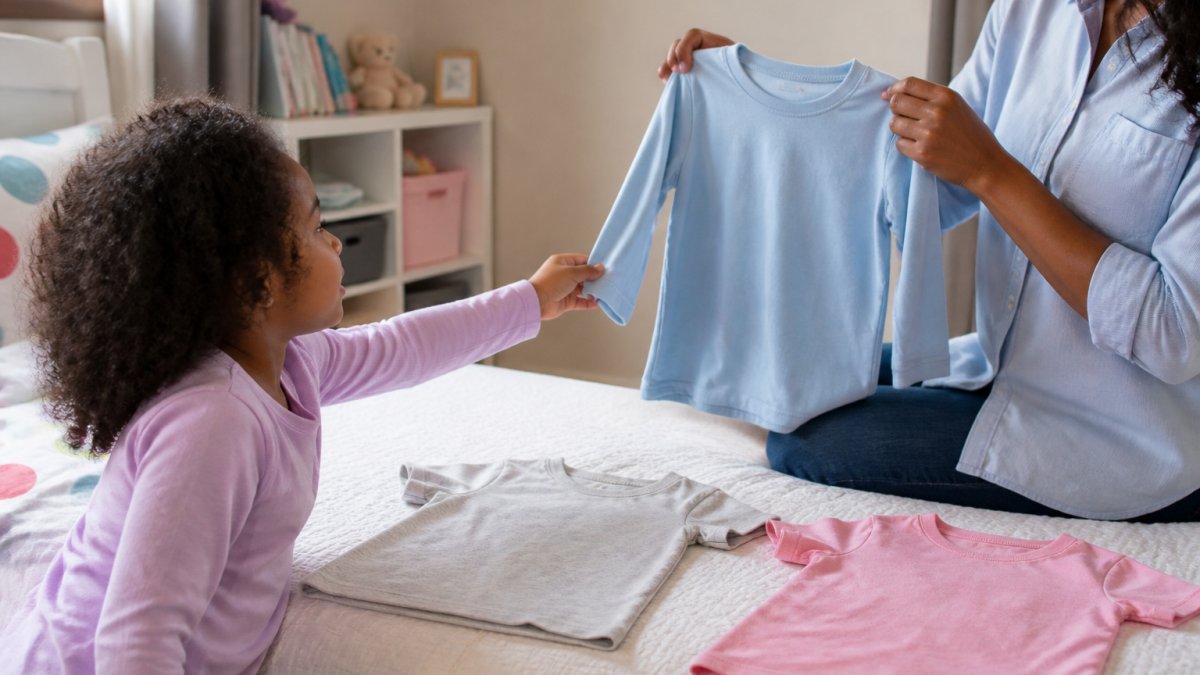
Try this routine:
- Lay out two approved options on the bed.
- Let the child pick one and explain why.
- Ask them to name one thing they like about the feel.
- Note the answer. Patterns in their reasons tell you what to buy next time.
Older kids can help build a short list of rules: "no tags," "nothing tight at the waist," "soft sleeves only." A child who helps write the rules is far more likely to follow them.
Tags, Seams, and Waistbands: Small Details That Decide What Gets Worn
Tags and seams cause more rejections than fabric does. A stiff label at the back of the neck can ruin an otherwise perfect shirt.
- Cut tags out close to the stitching, or buy tagless labels printed directly on the fabric.
- Check seams inside the shirt; flat or minimal seams sit quietly, bulky overlocked seams rub.
- Look at waistbands. A soft, covered elastic beats a tight gathered band every time.
For a deeper walkthrough on removing itchy labels without wrecking the garment, see our guide to avoiding itchy tags in kids clothes.
Watch out: cutting a tag too close can open a hole in the seam, and that hole will grow with every wash.
A Practical Shopping Workflow: Size Charts, Budgets, and Returns
A repeatable workflow beats a lucky shopping trip. Most parents lose money on picky kids clothes by buying too many pieces at once, guessing on size, and missing the return window.
- Measure once. Take chest, waist, and height at home and write them down.
- Check the size chart on every product page; sizing varies by brand and cut.
- Set a budget per piece before you browse, and stick to it.
- Order one or two items first to test fit and feel.
- Keep the packaging until the child has worn the item for a full day.
- Check the return window before you cut tags or wash anything.
Build a Size Profile Before You Shop
A size profile is a short note on your phone with four numbers per child: height, chest, waist, and inseam. Update it every few months, since kids grow in spurts.
Use the profile against the brand's size chart, not the size on the shirt that currently fits. A "5" in one brand can match a "6" in another, and a "relaxed fit" can run a full size larger than a straight cut.
A few practical rules that cut returns:
- Compare two dimensions, not one. Match chest and height together; a shirt that fits the chest but is two inches short will be rejected on length.
- Size up on outerwear, not on base layers. A too-big tee slides and bunches, which sensory-sensitive kids notice; a too-big jacket just gets worn over more layers.
- Check the shrink note. If the listing says "pre-shrunk" or "garment-washed," the listed size is closer to the final size. If it does not, assume some shrinkage on cotton and size accordingly.
Set a Real Budget Per Piece
A per-piece budget is more useful than a total budget because it forces a decision at the moment of purchase.
Spend more on the items the child actually wears. If a child lives in three tees and rejects everything else, the budget should follow the three tees, five cheap rejected shirts cost more than two worn daily.
Use Returns as a Tool, Not an Afterthought
Returns are the safety net for online shopping, but only if you plan for them before checkout:
- Read the return window before you buy. The clock usually starts at delivery, not at order.
- Check whether tags must stay attached. Cutting a tag can void the return.
- Know the restocking fee and factor it into the per-piece budget.
Keep a single bin for "maybe" items. Anything unworn within two weeks goes back before the window closes.
Reduce Trial and Error With Sample Purchases
When a brand and style work, buy one in a second color before buying five. The sample purchase tests whether fit is consistent across colors and whether the child accepts the new shade. If it passes, buy multiples; if it fails, you spent one piece of money instead of five to learn the lesson.
Keep a Simple Buying Log
A buying log is a note with three columns: item, brand and size, and verdict. One line per purchase. Over a season it tells you which brands run true, which fabrics survive the wash, and which details your child rejects every time.
How to Prevent Kids Clothes Shrinking and Falling Apart
Heat is the enemy. Most shrinking and fading comes from hot water and a hot dryer, not the fabric itself. Turn clothes inside out, wash cold, and dry low or line dry.
- Wash dark colors together and inside out.
- Skip fabric softener on stretch fabrics; it breaks down elastic.
- Zip zippers and button buttons before washing to stop snags.
For a full set of steps, read our guide on how to prevent kids clothes shrinking. It walks through water temperature, dryer settings, and which fabrics need the gentlest handling.
Care Routines That Keep Accepted Pieces in Rotation
Build the routine around the pieces your child actually wears, and sort approved items into one laundry load so they do not get lost among rejected clothes.
- Wash on cold with a gentle cycle.
- Dry on low heat and pull items out slightly damp.
- Hang or fold right away to keep shape.
A shirt that survives fifty washes beats three cheap ones that pill after five.
Build a Small Wardrobe From the Pieces Your Child Approves
A small, approved wardrobe beats a full closet of maybes. Once you know which fabrics, fits, and details work, buy multiples of the winners.
- Three or four soft tees in colors your child likes.
- Two pairs of stretchy pants or shorts.
- One or two sweatshirts for layering.
Fewer pieces means fewer decisions and fewer morning fights. Our unisex classic tee is a good starting point: 100% cotton, a classic fit, and a taped neck and shoulders that sit flat, in a range of colors so a child can pick the shade and still get the feel they trust.

For fabrics beyond cotton, our guide to the best fabrics for sensitive skin goes deeper on modal, blends, and what to look for on a label.
Shop Play-Proof Basics That Survive Real Playtime
Play-proof clothing comes down to three things: soft fabric, sturdy stitching, and a fit that lets kids move. For tested toddler options to act on, see our durable play clothes for toddlers. A piece that feels good but falls apart in a month is not a bargain.
Our apparel is built for real playtime and the washing machine that follows:
- Pill-resistant fleece that stays smooth wash after wash, like our crew neck sweatshirt.
- Double-needle stitching at cuffs and hems, which holds up to tugging and repeated washing.
- Certified organic cotton in our organic sweatshirts, which carry GOTS and OCS certification.
Every thread we sell supports our childcare community, so a shirt that lasts is also a purchase that gives back. Start with one piece, let your child test it, and build from there.
Frequently Asked Questions
How can I tell which fabrics my child will find comfortable?
Let your child touch the fabric before you commit. Hold the garment against the inside of the wrist or the side of the neck, since those areas are as sensitive as the torso. Soft cotton and cotton-polyester blends with a brushed fleece inside tend to pass this test more often than stiff or scratchy weaves. If a fabric feels rough against your own skin, assume it will feel rougher to a child who is already sensitive. Buy one piece first and test it through a full day of play and one wash before buying more.
Should I remove tags from my child's clothes?
Yes, if your child complains about them. Cut tags flush with the seam rather than pulling them out, which can leave a sharp edge. Tagless labels printed directly on the fabric avoid the problem entirely, but check that the print does not sit high on the neck. For kids with strong sensory sensitivities, tagless labels and smooth back-neck tape are worth prioritizing over style. Keep a small pair of scissors in the laundry room so tag removal happens before the first wear, not after a meltdown.
How do I keep kids clothes from shrinking in the wash?
Wash cotton in cold water and tumble dry on low or hang dry. High heat is the main cause of shrinkage in cotton knits, and it also breaks down stretch fibers over time. Turn garments inside out, skip fabric softener on fleece, and dry heavy sweatshirts flat or on a low setting. Buying a slightly roomier fit also gives cotton room to settle without becoming too tight. Check the care label on each piece, since blends with polyester hold their size better than 100% cotton.
How do I shop for clothes when my child is picky about what they wear?
Shop with a short list of fabrics and features your child has already accepted, and buy those in multiple colors rather than experimenting widely. Bring your child to one store or one online session with two or three choices, not a full cart. Use the size chart and measure at home instead of guessing, and confirm the return window before you order. A small, tested rotation of picky kids clothes beats a large wardrobe that mostly goes unworn.
Picky dressing does not have to mean a closet full of rejects. It means buying with a plan: feel the fabric, check the seams, measure once, and let your child have a say. The Tee Shop makes purpose-driven apparel with soft fabrics, sturdy stitching, and play-proof comfort, so the pieces your child approves are the ones that last. Get started with The Tee Shop and build a small wardrobe that survives real playtime.
