


Why Ethical Fashion Costs More: A Transparent Breakdown
Table of Contents
- Why Ethical Fashion Costs More: The Real Breakdown
- Fair Wages and Ethical Production
- Sustainable Materials and Organic Cotton Clothing
- Small Production Runs and Economies of Scale
- Quality, Durability, and Cost Per Wear Clothing
- Fast Fashion vs Sustainable Fashion: The Hidden Costs
- Finding Affordable Ethical Clothing Without Compromise
- Frequently Asked Questions
Last Updated: October 12, 2026
Why Ethical Fashion Costs More: The Real Breakdown
Compare a $22 t-shirt to a $45 sweatshirt and the gap feels stark, but it isn't arbitrary, it reflects a fundamentally different approach to how clothing gets made. Understanding why ethical fashion costs more goes far deeper than brand markup or marketing hype.
Cheap clothing hides its true costs, paid by garment workers earning pennies per hour, ecosystems drowning in chemical runoff, and landfills overflowing with discarded synthetics. When you buy ethical fashion, you're not paying more, you're paying what the product actually costs to make responsibly. Everything else has been subsidized by hidden damage.
Understanding why ethical fashion costs more is about recognizing what your money actually supports. Below, we break down where the premium comes from, labor, materials, processes, production scale, and how to think about cost for your family's budget and conscience.
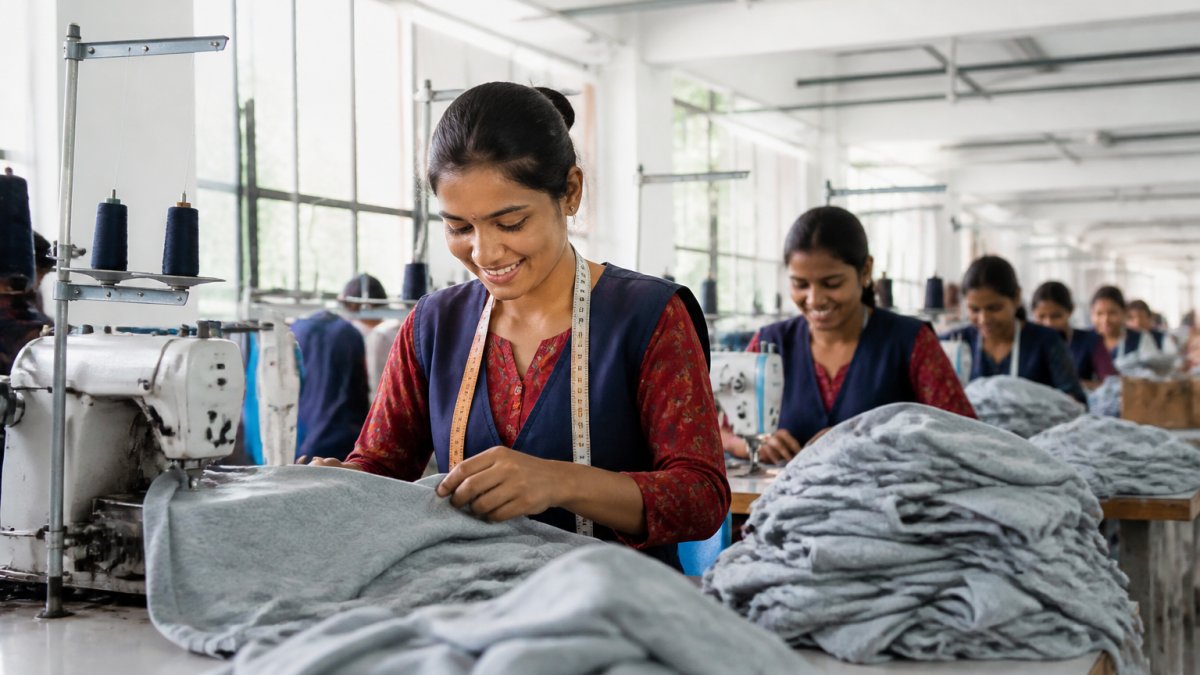
Fair Wages and Ethical Production
The single largest cost driver in ethical fashion is labor. When a factory commits to fair wages, regulated hours, and safe conditions, per-garment labor costs rise dramatically compared to facilities with minimal oversight and subsistence-level wages.
Fair wages aren't a luxury add-on; they're the baseline cost of ethical production. A worker in a facility meeting international labor standards earns 3 to 5 times as much as one in a sweatshop for the same work, and that difference shows up in your final price. Buying from brands committed to ethical production funds workers who can afford housing, healthcare, and education for their families.
Ethical facilities also invest in safety infrastructure, ventilation for chemical exposure, ergonomic workstations, first aid stations, and regular training, requiring capital investment and ongoing maintenance. Facilities that cut corners skip these expenses entirely, which is precisely why their products cost less.
Supply-chain transparency adds another layer. Ethical brands track garments from fiber to finished product, maintaining records of where materials come from and who handled them. This traceability requires third-party audits, documentation systems, and verification processes, costs a brand hiding its supply chain avoids and an ethical brand builds into the price.
Sustainable Materials and Organic Cotton Clothing
Materials carry a premium too. Organic cotton clothing requires certification, testing, and documented farming practices conventional cotton avoids. Organic farming prohibits synthetic pesticides and fertilizers, meaning higher labor costs for manual weeding, lower yields per acre, and more rigorous soil management. The result: organic cotton costs roughly twice as much as conventional cotton at the farm gate.

Recycled fibers like recycled polyester add their own costs: collection infrastructure, sorting facilities with trained staff, and energy-intensive recycling processes. Virgin polyester made from petroleum is cheaper because its environmental costs, carbon emissions, water consumption, chemical processing, are externalized rather than paid upfront.
Natural fibers like linen and hemp also cost more than fossil-fuel synthetics. Processing them into yarn requires different equipment and expertise, and smaller supply chains mean less economies of scale and higher per-unit costs.
When you buy organic cotton clothing or recycled-fiber items, that premium reflects the actual cost of sustainable sourcing, not a marketing markup.
Small Production Runs and Economies of Scale
Fast fashion thrives on enormous volumes. A single style might be manufactured in quantities of 50,000 or 100,000 units, letting factories spread fixed costs, equipment setup, quality control, shipping logistics, across massive numbers of garments. Per-unit costs plummet.
Ethical brands operate at much smaller scales, production runs of 5,000 to 10,000 units instead of 50,000. Smaller volumes mean less negotiating power on materials, less efficient use of factory capacity, and higher per-garment overhead. A 2,000-unit run simply cannot match the cost efficiency of a 50,000-unit run of the same design.
This is where ethical fashion economics diverge sharply from fast fashion: you cannot achieve fast-fashion pricing at ethical production volumes. Either you increase volume dramatically, requiring the overproduction that drives fast fashion's environmental damage, or you accept higher per-unit costs.
Small production runs also reduce waste, a factory producing exactly what it can sell generates far less excess inventory than one manufacturing speculatively, but that doesn't offset the per-unit cost penalty of smaller scale. It means less waste, not lower prices.
Quality, Durability, and Cost Per Wear Clothing
Cost per wear is the only price metric that reflects what a garment actually costs your household: purchase price divided by the number of times you wear it. Most shoppers never run the numbers, so the lower sticker price always wins in the moment, even when it loses badly over time.
Here's a like-for-like example: a fast-fashion pullover around $15 versus a heavier, certified organic and recycled-fiber sweatshirt around $45, both worn by the same person in the same rotation.
| Factor | Fast-fashion sweatshirt (~$15) | Certified organic/recycled sweatshirt (~$45) |
|---|---|---|
| Fabric weight | Roughly 4-5 oz./yd.² | Roughly 10 oz./yd.² brushed fleece |
| Construction | Single-stitched seams, thin ribbing | Double-needle topstitching, reinforced hems |
| Realistic lifespan | 15-30 wears before pilling, shrinking, or seam failure | 150-300 wears with normal care |
| Cost per wear at 20 wears vs. 200 wears | ~$0.75 | ~$0.23 |
| Replacement cycles over 5 years | 4-6 garments | 1 garment |
| 5-year total spend | ~$60-$90 | ~$45 |
The fast-fashion garment looks cheaper per wear only if you stop the clock at the first few wears. Once you account for replacement, stretched collars, pulled seams, thinned fabric, the five-year spend is higher and cost per wear climbs with every replacement. The ethical garment's higher upfront price is amortized across a much longer service life.
What drives longevity is measurable construction, not marketing language. Fabric weight is the clearest signal: a 10 oz./yd.² brushed fleece has roughly twice the fiber mass of a 4-5 oz. alternative, resisting thinning and holding shape through repeated washing.
Certifications matter here too, but for a different reason. GOTS (Global Organic Textile Standard) verifies organic cotton content and sets processing and social criteria along the supply chain; GRS (Global Recycled Standard) verifies recycled content and chain-of-custody. Neither guarantees a garment will last longer, they verify what the fiber is and how it was processed.

The catch: cost per wear only works if you actually wear the garment. A durable piece you never reach for is worse value than a cheap piece you wear constantly. Fit, color, and versatility belong in the same calculation as fabric weight and stitching. The goal isn't the most expensive garment, it's the one you'll wear the most, for the longest.
Fast Fashion vs Sustainable Fashion: The Hidden Costs
The gap between fast fashion and sustainable fashion isn't really about the garment itself. It's about who pays the true cost of production.
Fast fashion externalizes costs. Workers bear unsafe conditions and poverty wages; communities bear chemical pollution from dyeing and processing; ecosystems bear pesticide-heavy cotton farming and microplastic shedding; landfills bear garments that take decades to decompose; consumers bear constant replacement as garments deteriorate rapidly.
Sustainable fashion internalizes these costs, paid upfront and built into the price on the tag. You're not getting charged less; you're getting charged honestly.
Conventional fashion's environmental impact is staggering. Textile manufacturing consumes enormous water, generates chemical-laden wastewater, and relies on fossil-fuel synthetics. A single cotton t-shirt requires roughly 700 gallons of water, and conventional dyeing releases heavy metals and toxic chemicals into waterways.
Ethical production reduces these impacts through lower-impact processing, water recycling systems, and natural or certified dyes. These measures cost more to implement and operate. That cost appears in your purchase price rather than hidden in environmental damage.
Fast fashion also depends on overproduction: brands manufacture far more than they sell, then discard unsold inventory, wasting both manufacturing inputs and landfill space. Sustainable brands produce closer to actual demand, reducing waste but increasing per-unit costs.
The true cost of fast fashion is staggering once you account for environmental and human damage. Sustainable fashion's higher price tag is a more honest accounting.
Finding Affordable Ethical Clothing Without Compromise
Ethical doesn't have to mean full price. The most effective way to lower cost per wear is to change how you acquire clothing, not just which brand you buy. Here are practical channels for shopping by values without paying retail every time.
Buy secondhand first. Thrift stores, consignment shops, and online resale platforms carry the same durable garments at a fraction of retail, letting you capture the longevity benefit at a lower price.
Repair before you replace. A popped seam, missing button, or small hole doesn't end a garment's life.
Organize or join a clothing swap. Swaps let you exchange unworn garments for ones you'll wear, at no cost, and work best for children's clothing where kids outgrow items long before the fabric wears out.
Rent for occasional wear. For formal events, seasonal items, or pieces you'll wear a handful of times, rental spreads the cost of a quality garment across many users.
Buy fewer, more versatile pieces. Instead of ten cheap t-shirts per season, buy four quality pieces that work across multiple outfits and seasons. A neutral, well-constructed sweatshirt or staple tee pairs with more of your wardrobe, increasing wears per garment and lowering cost per wear.

Verify claims before you pay a premium. Certifications are the most reliable shortcut: GOTS verifies organic fiber content and sets processing and social criteria, GRS verifies recycled content and chain of custody, and Fair Trade Certified verifies social and environmental standards at the factory level.
Look for supply-chain transparency. Brands that publish where garments are made, who makes them, and what standards they meet give you something to verify. If a brand won't disclose this, treat the sustainability claim as unverified.
| Strategy | Cost Impact | Best For | Main Trade-off |
|---|---|---|---|
| Secondhand and resale | Lowest upfront cost | Budget-conscious shoppers | Limited selection and sizing |
| Repair and mending | Near zero | Extending existing garments | Time and skill |
| Clothing swaps | Free | Children's and casual wear | Depends on a swap group |
| Rental | Low per-wear for occasional items | Formal and seasonal wear | Not cost-effective for daily basics |
| Fewer, versatile pieces | Higher upfront, lower long-term | Everyday wardrobes | Requires upfront budget |
| Certification checks | Verifies claims | Values-driven buyers | Covers specific claims only |
None of these options require compromising on values. They require thinking about cost per wear, verifying claims, and choosing the acquisition channel that fits the garment's actual use. A repaired hand-me-down and a certified organic sweatshirt can both be ethical choices, they just solve different problems in your wardrobe.
Frequently Asked Questions
Why does ethical fashion cost more than fast fashion?
Ethical fashion costs more because it prioritizes fair wages, sustainable materials, and smaller production volumes. Fast fashion relies on low labor costs, synthetic fibers derived from fossil fuels, and massive production runs to keep prices down. Ethical brands invest in better working conditions, certified organic cotton or recycled materials, supply-chain transparency, and quality construction. These practices increase production costs, but result in garments that last longer and cause less environmental damage.
Is affordable ethical clothing actually possible?
Yes, but affordability depends on how you measure value. A $22.55 eco t-shirt made from recycled materials costs more upfront than a $5 fast fashion shirt, but lasts significantly longer. By calculating cost per wear, dividing the price by how many times you wear it, ethical clothing often becomes more affordable over time. The Tee Shop offers ethical pieces, such as the Unisex staple eco t-shirt for $22.55, making sustainable fashion accessible without sacrificing quality or values.
How can I tell if a clothing brand actually pays workers fairly?
Look for third-party certifications and transparent supply-chain information. Certifications like Fair Trade USA, SA8000, and GOTS (Global Organic Textile Standard) verify ethical labor practices. Reputable brands publish details about where garments are made, factory conditions, and worker wages. The Tee Shop clearly states material certifications on product pages, allowing you to verify claims before buying.
Does a higher price always mean clothing is ethically made?
Not necessarily. Higher prices don't guarantee ethical production, some brands mark up prices for marketing alone. Look beyond price tags to certifications, supply-chain transparency, and material sourcing. A $44.68 organic sweatshirt with GOTS and GRS certifications offers verifiable evidence of ethical practices. Always check product descriptions for certifications and manufacturing details rather than assuming premium pricing reflects genuine ethical standards.